DST Roofing
Miami, FL · Industries
Commercial roofing for Delaware Statutory Trust (DST) properties and 1031 exchange investors throughout Miami, FL.
Delaware Statutory Trust sponsors acquiring commercial properties in Miami face a hurricane risk profile that is routinely and dangerously underestimated by out-of-state principals. The gap between what national underwriting models assume and what the South Florida commercial roofing environment actually demands is wide enough to collapse a deal's projected returns — and it has done exactly that to DST offerings that were marketed with reserve assumptions derived from generic national benchmarks rather than Miami-specific conditions. Hurricane exposure is not a tail risk in this market; it is a recurring operational reality that must be built into every aspect of a DST's financial structure.
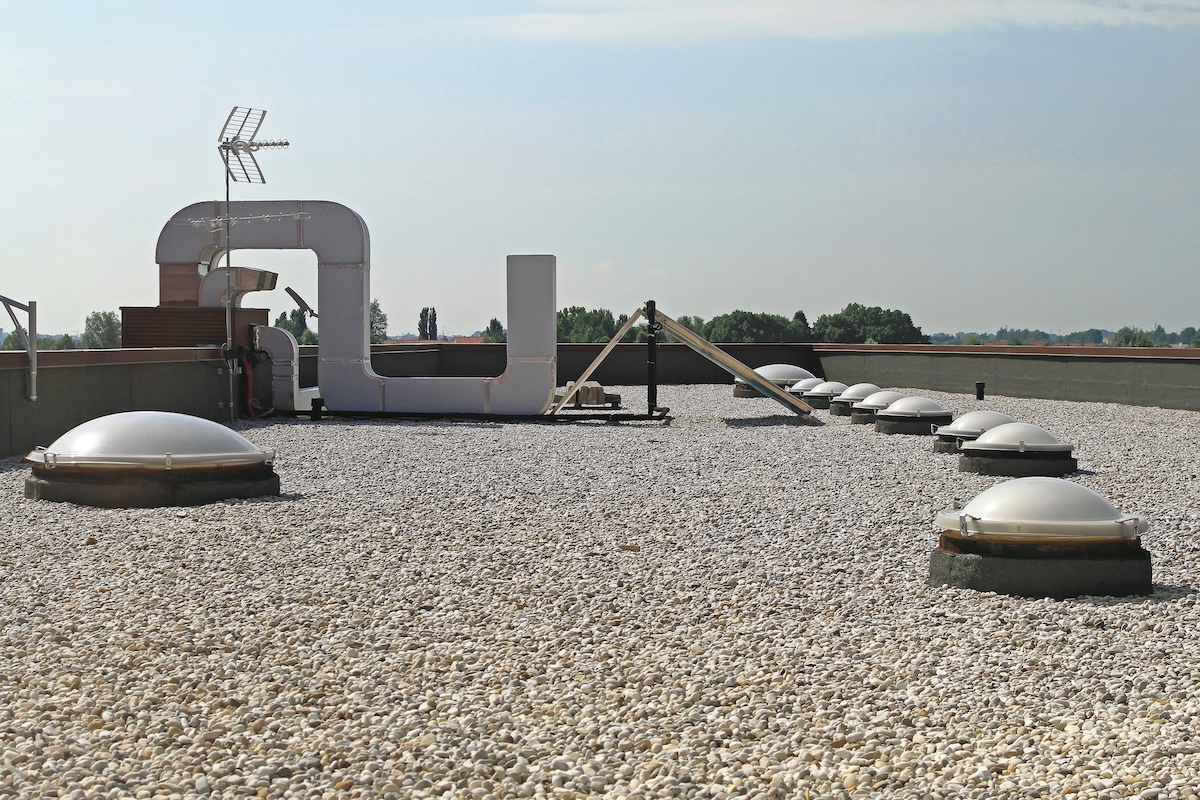
The 2004 and 2005 hurricane seasons, followed by Irma in 2017 and Ian in 2022, provide a documented track record of what commercial roof failures look like in South Florida. Flat membrane systems, which dominate Miami's commercial stock in warehouse, industrial, and retail asset classes, are vulnerable to both wind uplift and prolonged water intrusion during storm events. HVAC units on rooftops — ubiquitous in Miami's climate — become projectile risks and penetration failure points during high-wind events. DST sponsors with properties in Miami-Dade and Broward counties should be modeling storm damage and post-storm repair costs as a near-certain occurrence over any hold period of five years or longer.
The 1031 exchange identification window creates exactly the kind of time pressure that causes DST sponsors to skip or compress roof due diligence. In a competitive acquisition market like Miami, where institutional and private capital compete for quality commercial assets, sponsors may be reluctant to delay a LOI over a roof inspection. That instinct is understandable and financially catastrophic. A commercial roof in Miami that was last replaced more than ten years ago may be approaching the end of its code-compliant service life, and post-Irma, Miami-Dade's permitting requirements for roof replacements have become more demanding and more expensive than sponsors modeling with national data typically anticipate.
Offering memorandums for DST interests in Miami commercial properties must include honest reserve modeling for storm event response. This is not optional from a sponsor liability standpoint. Investors and their broker-dealer representatives in the DST marketplace are increasingly scrutinizing reserve adequacy disclosures, and a reserve figure that assumes no major storm damage during a seven-year hold in Miami is not a defensible assumption. The reserve should reflect current South Florida contractor pricing — which is substantially higher than national averages due to licensing requirements, code compliance costs, and demand concentration after storms — and should include a storm response contingency.
The passive investor structure of a DST means that when a hurricane causes significant roof damage, the trustee must act without investor input and must have reserves available to fund emergency repairs immediately. A tenant in a Miami commercial property who experiences roof failure during or after a storm has specific rights under Florida law, including potential rent abatement claims. The trustee's ability to respond quickly and document that response is the difference between a contained maintenance event and a distribution suspension that triggers investor complaints and potential regulatory scrutiny.
Several prominent DST sponsors active in the Florida market have learned to build pre-close relationships with South Florida roofing contractors who understand both the technical requirements of Florida Building Code compliance and the documentation requirements of DST due diligence packages. A roof condition report prepared by a licensed Florida contractor, addressing current condition, estimated remaining useful life, and storm readiness, carries significantly more weight with institutional broker-dealers than a report prepared by an out-of-state inspector unfamiliar with local code standards.
Miami's commercial roofing market is also characterized by significant labor and materials price volatility following storm events. Post-Irma, roofing contractor capacity was strained for eighteen months across South Florida, and costs for both temporary mitigation and permanent repairs were 40 to 60 percent above pre-storm levels. DST sponsors who built reserves based on pre-storm pricing found themselves underfunded when repairs were actually needed. Building reserves with a post-storm cost premium baked in — not as a worst-case scenario but as a reasonable planning assumption — is how professional Miami DST operators protect their investors.
The hold period on a Miami DST commercial property should be managed with a proactive inspection and maintenance schedule specifically designed for hurricane preparedness. Pre-storm season inspections in April and May, addressing flashings, drains, penetrations, and membrane condition, reduce both the likelihood of storm damage and the scope of repairs needed after an event. Post-storm inspections, conducted promptly and documented thoroughly, are essential for insurance claims and for investor reporting. Out-of-state asset managers who lack an established local contractor relationship routinely struggle with both of these obligations.
DST sponsors entering the Miami commercial market for the first time should treat roof condition assessment as a non-negotiable component of pre-acquisition due diligence, commission reserve models built on South Florida contractor pricing, and establish a formal service relationship with a licensed local roofing contractor before the property closes. The Miami commercial real estate market offers DST sponsors strong fundamentals — population growth, industrial demand, and tourism-driven retail resilience — but those fundamentals are only accessible to investors if the physical asset is maintained to the standard the climate demands.
Frequently asked questions
Do you work on M-DCPS school building projects?
Yes. We are familiar with the Miami-Dade County Public Schools capital projects procurement process, vendor prequalification requirements, and the Office of School Facilities' project management and documentation standards. School Board projects require certified payroll compliance, specific insurance certificate language, and milestone payment applications — we maintain these as standard documentation for school board work.
How do you complete school building reroofs during the summer window?
We staff school building projects to the production rate the academic calendar requires, not to a minimum crew. A 120,000-square-foot elementary school with a 10-week summer window needs a crew deployment that can complete that footage — including permitting, tear-off, and final inspection — within the window. We present a specific crew size and daily production rate projection at the pre-bid stage so the school district can evaluate the schedule commitment before the contract is awarded.
What is the procurement process for university roofing projects at UM or FIU?
Both University of Miami and Florida International University run competitive bid processes for roofing projects above the applicable threshold. UM is a private institution with its own facilities management procurement process; FIU follows Florida public university procurement requirements. Both require contractor qualification documentation — bonding capacity, insurance certificates, license, and project references — before the bid submission. We maintain current qualification documentation and can submit on short notice for projects in the solicitation window.
How do you handle research lab buildings where leaks could damage ongoing research?
Research buildings get a higher-frequency inspection cadence in our maintenance contracts — quarterly inspection of sections above lab spaces and critical research equipment areas, in addition to the annual full-roof inspection. Emergency response to leak calls in research buildings is prioritized to same-day dry-in because the cost of a research disruption event can dwarf the cost of an emergency repair call. We document the sections above all critical research spaces in our initial inspection and flag them explicitly in the maintenance contract scope.
Get a written roof assessment for your Miami educational facility.
Our project managers understand the academic calendar constraints, public procurement requirements, and active-campus scheduling that educational roofing in Miami-Dade requires. We will document the condition and deliver a written scope that works within your timeline and procurement framework.
Explore More
- Entertainment Media Roofing
- Real Estate Roofing
- Food Processing Cold Storage
- Healthcare Roofing
- Hospitality Tourism Roofing
- Roof Inspections
- Standing Seam Metal Roofing
- Multifamily Roofing