Silicone Roof Coating Systems
Miami, FL · Roof Systems
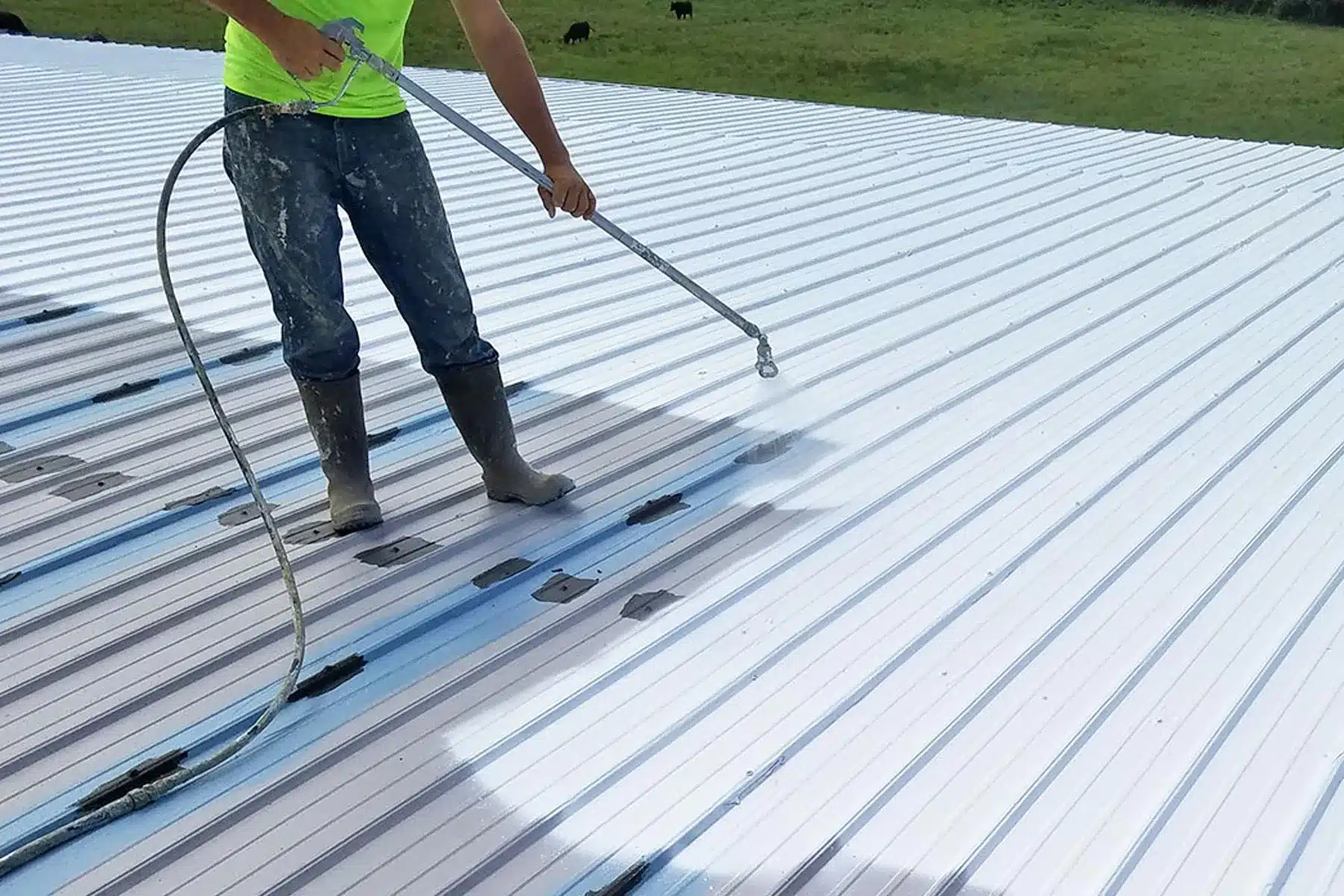
A silicone coating restoration system on the right Miami commercial building extends roof asset life by 10 to 15 years at roughly 30 to 40 percent of full replacement cost. The qualification — the right building — is everything. Silicone does not fix structural deficiencies, cannot be applied over wet insulation, and is not a substitute for replacing a membrane that has lost its structural integrity.
Silicone's performance advantages in Miami's environment are real and well-documented. Silicone polymers resist UV degradation — which matters enormously in a market where unprotected roofing membranes degrade measurably faster than in northern markets. Silicone remains flexible at both Miami's summer surface temperatures and its occasional winter cold fronts, which eliminates the thermal cycling brittleness that affects some acrylic coatings. And silicone is more resistant to the ponding water that accumulates on South Florida flat roofs during Miami's wet season than competing fluid-applied systems — silicone does not absorb water or lose adhesion in ponded areas the way acrylics do.
The Miami-Dade NOA requirement for silicone restoration systems is the qualification that separates compliant restoration from non-compliant coating application. Not every silicone product applied over every substrate in Miami-Dade is compliant — the NOA is substrate-specific, coverage-rate-specific, and manufacturer-specific. A silicone coating applied at a lower coverage rate than the NOA specifies, or applied over a substrate not covered by the NOA, is not a compliant installation and will not produce the rated wind uplift resistance or waterproofing performance.
Salt air exposure creates a specific pre-application preparation requirement on coastal Miami buildings. Salt crystallization on the existing membrane surface must be removed before coating application — a sodium-contaminated surface prevents adequate silicone adhesion and produces coating delamination within the first weather cycle. On bayside and oceanside buildings, we perform pressure washing and dwell-time neutralization treatment before any silicone application, and we verify surface cleanliness before application begins.
Qualifying Miami Buildings for Silicone Restoration
The core qualification for silicone restoration is a dry insulation layer and a structurally intact substrate membrane. Moisture cores are mandatory on every building we evaluate for silicone coating — we will not apply silicone over a roof with wet insulation, because the coating traps the moisture and accelerates the degradation that the owner is trying to avoid. We pull moisture cores at five to ten representative locations, covering drain areas, low points, and any areas with prior water intrusion history before issuing a restoration recommendation.
Seam condition on the existing membrane is the second qualification. Delaminated seams on single-ply substrates must be repaired before silicone application — silicone bridges minor seam gaps but cannot substitute for a properly bonded seam. We perform seam probe inspection on all single-ply substrates before restoration and repair open seams with manufacturer-specified termination tape or hot-air weld before coating application begins.
The FBC HVHZ wind uplift status of the existing assembly is the third qualification. A silicone coating system applied over a non-HVHZ-compliant substrate does not correct the base assembly's uplift deficiency — it only adds a waterproofing layer over a non-compliant foundation. If the substrate assembly lacks a current Miami-Dade NOA, the building's HVHZ compliance depends on whether a NOA-approved coating system applied over the existing substrate restores compliance. We verify NOA status before recommending coating restoration as a compliance path.
Application Rates, NOA Compliance, and Miami-Dade Inspection
Miami-Dade product approval for silicone coating systems specifies the minimum dry film thickness (DFT) that must be achieved to maintain NOA compliance. Most silicone systems approved for Miami-Dade use require 20 to 30 dry mils of coverage — which requires application at 1.5 to 2.0 gallons per 100 square feet of coating material at 60 to 70% solids content. Silicone applied at lower coverage rates looks similar to a compliant application but does not deliver the waterproofing redundancy or UV protection the NOA was based on.
We document application rates on every silicone project with a wet film thickness gauge at each pass — not just a total-material-used calculation that averages coverage over the entire roof. Uneven application can mean one area is over-applied to compensate for another area that was under-applied, and the under-applied area remains the vulnerability. Coverage documentation is part of every closeout package.
Miami-Dade building department permits are required for silicone restoration systems that are permitted under the NOA as a re-roofing application rather than a maintenance application. The line between a maintenance coating and a permit-required re-roofing application depends on the NOA designation for the specific system and the value threshold for the work. We determine permit requirement for every silicone project before mobilization and pull permits where required.
Cool-Roof Performance in Miami's Cooling-Dominated Climate
Miami-Dade County's climate is almost entirely cooling-dominated — heating loads are negligible, and reducing roof surface temperature directly reduces cooling energy consumption. White silicone coatings with initial solar reflectance above 0.80 reduce rooftop surface temperatures from 160-plus degrees F (on dark membrane) to below 120 degrees F. The energy modeling savings on a 50,000-square-foot Miami commercial building with high internal cooling loads can justify the silicone restoration cost through energy savings alone over 5 to 7 years.
Florida Energy Code compliance for re-roofing projects in Miami-Dade requires meeting the current minimum cool-roof reflectance requirements for the replacement or restoration system. Most silicone systems that carry Miami-Dade NOA approvals also meet the Florida Energy Code minimum reflectance requirements — but we verify Energy Code compliance for every restoration system specification, because some tinted or specialty-color silicone products do not
Frequently asked questions
How do I know if my Miami roof is a good candidate for silicone coating?
The three qualification criteria are: dry insulation (confirmed by moisture cores), structurally intact existing membrane (intact seams, no blistering, no structural damage), and a Miami-Dade NOA covering the silicone system over the specific substrate. If all three are met, silicone restoration is a legitimate capital deferral. If any one fails — wet insulation, failed seams, or no active NOA for the substrate — the restoration path requires either addressing the deficiency first or proceeding directly to full replacement.
Does silicone restoration carry a manufacturer warranty?
Yes — most silicone systems applied at NOA-required coverage rates carry 10-year manufacturer warranties. The warranty is coverage-rate-dependent: the warranty is voided if the application rate is below the manufacturer-specified minimum. We document coverage rates at application and provide the documentation to the manufacturer's warranty desk at closeout. The 10-year warranty is separate from the underlying substrate warranty, which may or may not still be active depending on the age and condition of the existing membrane.
Can silicone be re-coated at the end of its warranty period?
Yes — silicone bonds to itself without surface preparation beyond cleaning, which means a second silicone coating pass at warranty expiration extends the waterproofing life without tear-off or substrate disruption. This re-coat cycle can extend a commercial roof's total service life to 30 to 35 years on a building where the original substrate was in good condition at the first coating application. The re-coat decision depends on the same core and seam qualification criteria as the initial coating.
What is the cost comparison between silicone restoration and full TPO replacement?
Silicone restoration on a qualifying Miami commercial building typically runs 30 to 40 percent of the cost of full TPO replacement on the same building. The comparison should include the capital deferral benefit — a 10-year restoration that defers a 25-year replacement contract is a legitimate capital planning tool. The comparison should also include the warranty comparison: a 10-year silicone warranty versus a 20-year NDL on a new TPO system. We provide the capital analysis as part of our restoration assessment.
Get a silicone restoration qualification assessment for your Miami building.
Our project managers will pull moisture cores, inspect seam condition, verify NOA coverage for your substrate, and give you a written recommendation with the capital comparison between restoration and replacement.
Explore More
- PVC Roof Systems
- Modified Bitumen Systems
- Built Up Roof Systems
- Standing Seam Metal Systems
- Spray Polyurethane Foam Systems
- Infrared Moisture Scanning
- Built Up Roofing
- Healthcare Facility Roofing