Industrial Roofing
Miami, FL · Services
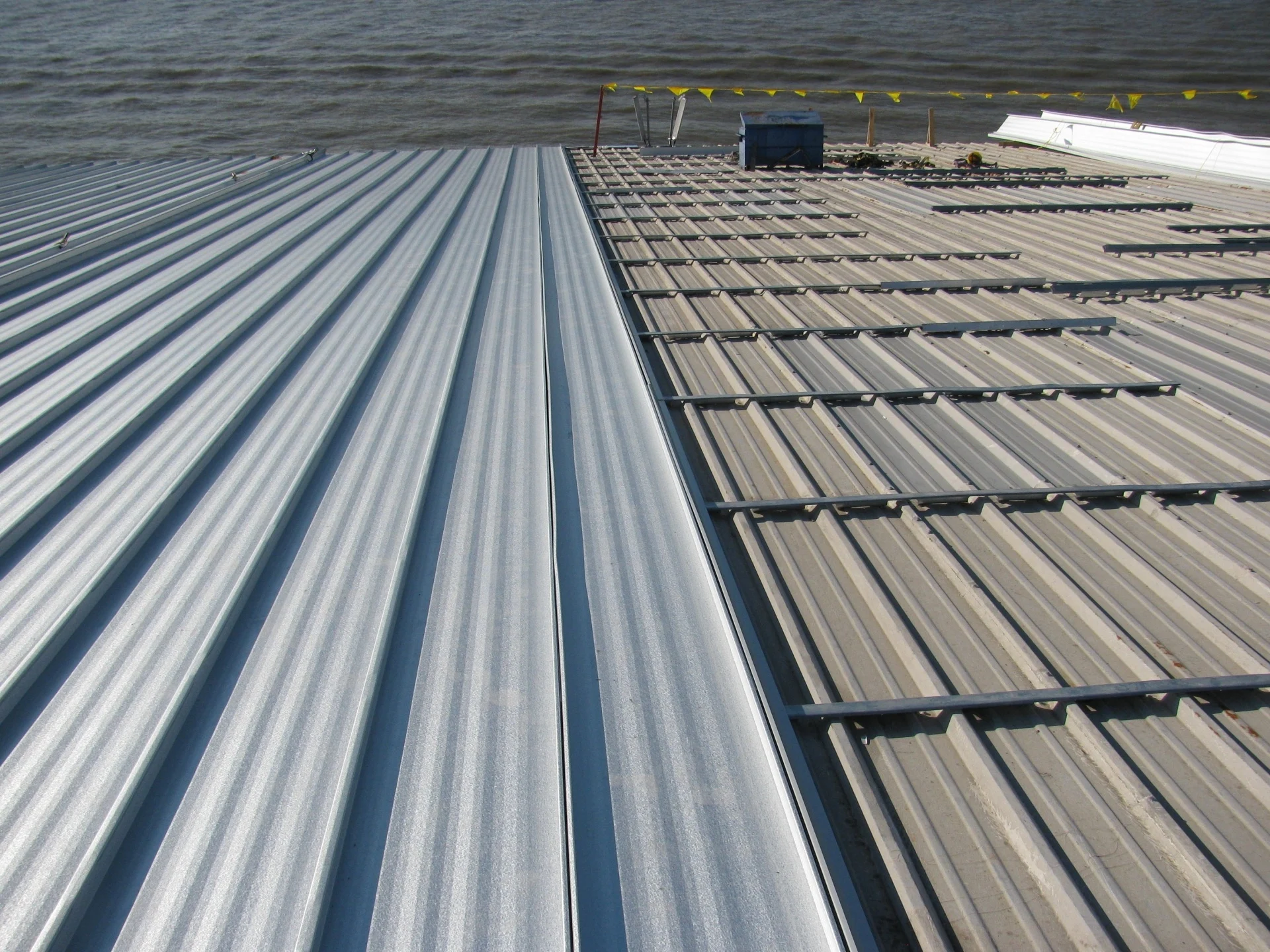
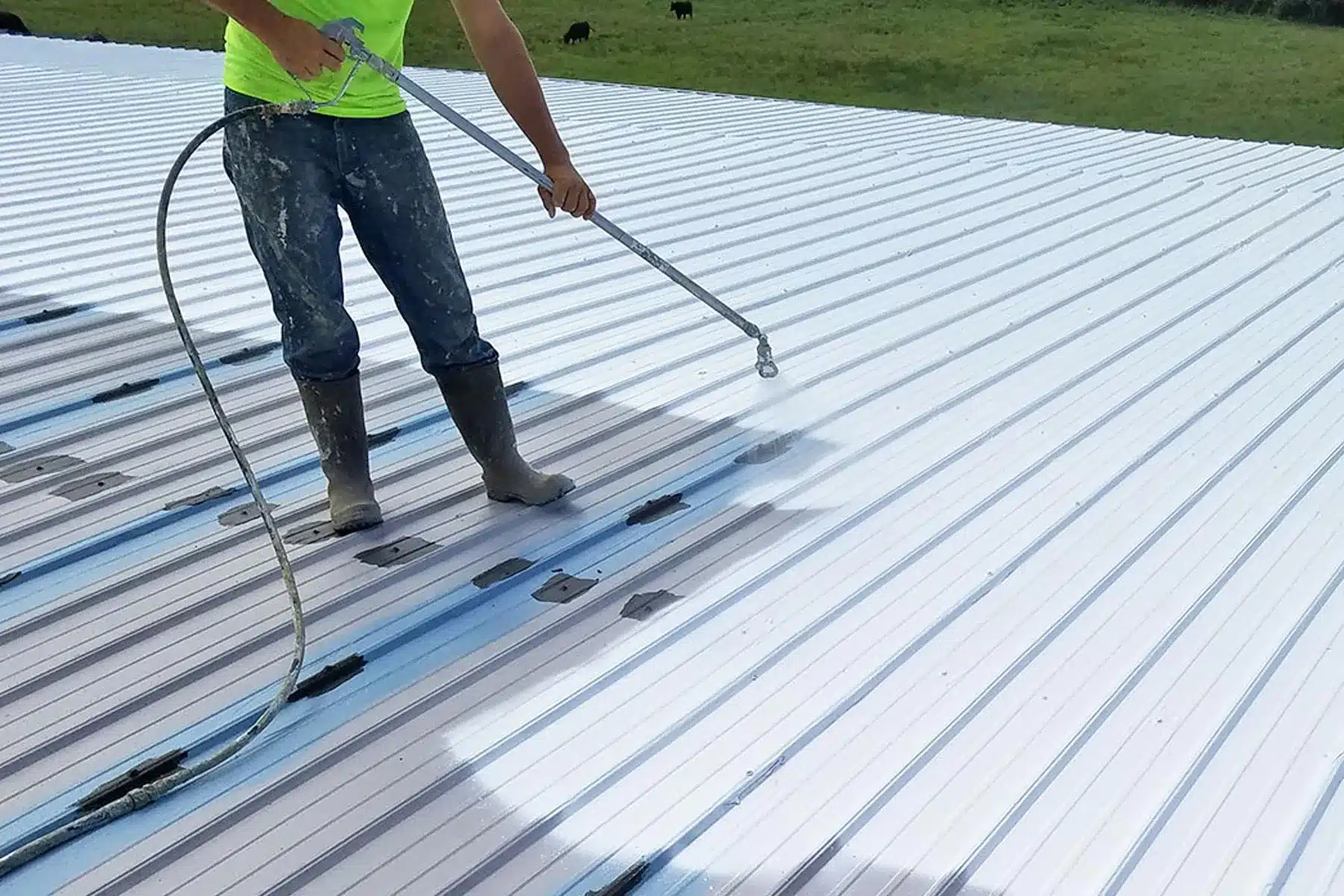
Industrial Roofing for manufacturing facilities, warehouses, and industrial buildings throughout Miami metro.
Port Miami moves more cruise passengers than any port on earth and handles millions of tons of cargo annually through PortMiami's container terminals, and the industrial fabric that surrounds it — bonded warehouses, cold storage, customs inspection facilities, freight forwarders, and logistics buildings — sits in one of the most demanding roofing environments in North America. Salt air off Biscayne Bay, 62 inches of annual rainfall concentrated in violent thunderstorm events, UV radiation that is among the most intense in the continental US, and hurricane exposure that includes Andrew in 1992 and Irma in 2017 — this is not a market where minimum-spec roofing survives. Every industrial roof we install in the Miami-Dade market is designed with the assumption that it will face a major hurricane during its service life.
The Hialeah and Medley manufacturing corridor is the densest industrial zone in South Florida, a grid of mid-century and post- that includes food processing, light manufacturing, pharmaceuticals, and distribution. The building stock is mixed — some concrete tilt-up construction from the 1980s with original built-up roofing systems that are well past their design life, and newer steel-frame buildings with TPO or metal panel systems that are performing well but need documented maintenance histories to support insurance claims after storm events. We've worked up and down this corridor and know which blocks have the permit history and which don't. In Miami-Dade County, a roof without permit history is a liability when the adjuster comes after a storm.
The Doral logistics corridor, running along NW 107th Avenue and the surrounding industrial parks west of Miami International Airport, is arguably the most actively developed industrial market in South Florida right now. New construction distribution centers, fulfillment buildings, and cold chain facilities are going up on a timeline that reflects e-commerce and pharmaceutical logistics growth, and the competition among developers to deliver new buildings means there's constant pressure on construction timelines. We're in several of these projects at the design phase, specifying roofing systems that are engineered to meet Miami-Dade County's HVHZ (High-Velocity Hurricane Zone) requirements from the first day of permitting — not patched together at the end when code compliance questions arise.
Miami International Airport handles more international freight by value than any other US airport, and the industrial buildings that ring the airport — freight forwarder facilities, airline catering buildings, ground support equipment hangars, bonded warehouse space — operate under the same access and operational constraints you find at any major hub airport, compounded by MIA's chronic congestion and the FAA overlay zones that govern crane operations near the runways. We've coordinated large-format industrial reroof projects near MIA with airport authority project management and know the approval process, the restricted work zone maps, and the overnight scheduling requirements that apply to crane and aerial work within certain distance bands from the airfield.
The Free Trade Zone of Miami and the adjacent Medley and Doral industrial properties that serve international trade introduce chemical exposure considerations specific to import/export industrial activity. Warehousing of agricultural chemicals, petroleum products, industrial cleaners, and other regulated materials creates roof penetration sealing requirements that go beyond standard practice. We use chemically resistant sealants at penetrations in buildings with known chemical storage, and we assess existing flashings on these buildings for signs of chemical degradation that standard visual inspection might miss. A sealant that has softened or swelled around a vent stack in a chemical warehouse is a failure that hasn't shown up as a leak yet but will.
UV degradation in Miami is a genuine engineering concern, not just an aesthetic one. The solar angle and intensity at 25 degrees north latitude means that roofing membranes oxidize faster than in northern markets. TPO membranes that are white and reflective when new gradually gray and embrittle — the timeframe depends on membrane quality and thickness, but 15-year-old TPO in Miami looks and performs like 25-year-old TPO in Minnesota. We build UV resistance into our specifications through membrane thickness selection (60-mil minimum on industrial roofs), factory-applied UV stabilizer packages on the membranes we specify, and silicone or acrylic topcoat systems on modified bitumen and older BUR surfaces that extend service life by protecting the base membrane from direct UV exposure.
Hurricane Andrew in 1992 rewrote Florida's building code, and Irma in 2017 tested that rewrite with a storm that crossed the full width of the Florida peninsula as a Category 4. Miami-Dade County has the most demanding wind uplift requirements in the state, and the FM 1-90, 1-120, and 1-150 uplift ratings that specify the wind uplift a roofing assembly must resist are not aspirational — they're code minimums. On every industrial roof project in Miami-Dade, we submit a product approval NOA (Notice of Acceptance) for the complete roofing system assembly, verify that the fastener pattern and density match the assembly tested for the required uplift rating, and inspect the actual installation to confirm that the field work matches the engineered design. The gap between what the submittal says and what gets installed is where hurricane roof failures happen.
I-75 and the Palmetto Expressway industrial ring brings the outer edge of the Miami market into Broward County and introduces the Miramar and Pembroke Pines industrial parks that serve both metro areas. These facilities are often owned by national REITs with sophisticated capital management processes, and they expect detailed written condition assessments, system specifications with material data sheets, and close-out documentation that supports their asset management systems. We deliver that documentation as a standard part of every project close-out. For industrial property managers handling portfolios that span multiple buildings, we also offer annual inspection programs that provide comparative condition data across all buildings in the portfolio so capital spending can be allocated based on actual condition rather than assumption.
Miami industrial roofing is a long-term commitment for us, not a volume game. The city and the market are too technically demanding to treat as commodity work, and the consequences of failures in the hurricane zone are too significant for the property owners and tenants we serve. Whether your facility is on the PortMiami industrial waterfront, in the Doral logistics corridor, in Hialeah's manufacturing grid, or along the I-75 industrial ring, we bring the technical depth this market requires. Start with an honest assessment. The condition of your roof is knowable, and the decisions that follow are better when they're based on facts.
Questions Owners Ask
A Notice of Acceptance is a Miami-Dade County product approval issued by the Florida Building Commission that certifies a roofing system assembly has been tested and approved for use in the county's High-Velocity Hurricane Zone. Every component of the roofing system — membrane, insulation, adhesive, fasteners, edge metal — must be part of an approved assembly under a valid NOA. If any component is substituted in the field, the NOA may be void and the installation may not pass inspection. We specify only NOA-compliant assemblies for Miami-Dade industrial projects, verify that the installed components match the NOA, and maintain documentation of NOA numbers in our close-out packages. Buildings with non-compliant roofing systems face permit closure problems, insurance coverage questions after storm events, and potential issues with property sales.
Twice yearly is the standard recommendation for Miami industrial roofs — once in April before hurricane season opens and once in December after it closes. The pre-hurricane season inspection focuses on seam integrity, flashing conditions, drain clearance, and any areas of potential uplift failure that should be addressed before storm season. The post-season inspection documents any damage from tropical weather events, including minor damage from near-miss storms that doesn't produce interior leaks but has compromised the system's ability to withstand a subsequent event. Between these formal inspections, we recommend monthly maintenance checks by facility personnel focused on keeping drains and scuppers clear — a clogged drain during a Miami thunderstorm cell can put a foot of water on a roof within minutes.
A 1980s built-up roof in Medley is probably 35 to 40 years old, which is beyond the design life of even a well-maintained BUR system. Whether restoration or replacement is appropriate depends on the condition of the existing substrate — specifically, the extent of insulation saturation and deck corrosion. We pull core samples and conduct infrared scans to determine moisture extent. If insulation saturation is limited to isolated areas covering less than 25 to 30 percent of the total roof area, a localized tear-out with restoration coating over the intact sections can extend service life at a fraction of replacement cost. If saturation is widespread or there is structural deck corrosion, full tear-off and replacement is the only path that produces a warranted, code-compliant system. We give you the data to make that decision, not just a recommendation.
Industrial facilities within the MIA airport influence zones require coordination with the Miami-Dade Aviation Department for any work involving cranes or aerial equipment above specified heights. The height thresholds vary by location relative to runway approach and departure paths, and the approval process involves filing a FAA Form 7460-1 Notice of Proposed Construction for certain equipment heights. We handle this coordination as part of our permitting process — it typically adds two to four weeks to the pre-construction timeline for projects in the restricted zones. We build that timeline into our project schedule proposals so clients know what to expect. Night work scheduling is often required for crane operations in sensitive zones, which affects crew costs and should be accounted for in the project budget.
Waterfront industrial buildings within a quarter to half mile of tidal water in Miami require system specifications that treat salt-air corrosion as a primary design constraint. This means stainless steel or hot-dip galvanized fasteners throughout, aluminum or stainless edge metal, silicone or urethane caulks at all penetrations and transitions rather than standard asphalt-based products, and frequent inspection of metal components during the annual maintenance cycle. For membrane selection, both TPO and PVC perform well in salt-air environments, though PVC's plasticizer migration in extreme heat is worth accounting for in system longevity projections. Modified bitumen systems need aluminum coating maintenance to protect the granule surface from the accelerated oxidation that salt air drives. On buildings where roof-mounted HVAC equipment uses coil fins, we recommend annual coil cleaning and fin coating to prevent the corrosion that transfers rust-laden drainage onto the roof membrane.
Frequently asked questions
Is built-up roofing still installed on new Miami commercial buildings?
Rarely on new construction. BUR has largely been replaced by TPO and PVC single-ply membranes for new commercial low-slope construction in Miami-Dade. Modified bitumen — a close relative of BUR using polymer-modified asphalt plies — is still specified for specific applications, particularly in recover configurations and on buildings where foot traffic and mechanical abuse favor the thicker ply system. We install and maintain both BUR and modified bitumen on existing buildings but rarely specify BUR for new construction.
How do I know if my 1980s Miami office building's BUR system is still viable?
A moisture survey is the starting point — either electronic moisture probing or infrared thermography. If insulation saturation is below 25 percent by area and the deck is sound, a recover with targeted wet-area removal and a new mechanically attached membrane or modified bitumen cap is often viable. If saturation is widespread or the deck is deteriorated, replacement is the honest scope. We provide the moisture survey data and the deck inspection findings as part of the assessment so the decision is based on documented condition rather than a contractor's estimate.
Can a BUR system be recovered with TPO in Miami-Dade?
Yes, when the BUR substrate is dry, the deck is sound, and an NOA-approved recover assembly exists for the specific BUR type and TPO system combination. We verify the NOA approval before designing the recover specification. Not all TPO manufacturer systems have Miami-Dade NOA approvals for BUR recover configurations — the approval list is assembly-specific.
What is the typical service life of a Miami BUR system?
A well-installed BUR system in Miami conditions typically provides 20 to 30 years of service life before significant rehabilitation is required. Miami's high UV intensity, surface temperatures exceeding 160 degrees F, and coastal salt environment accelerate asphalt oxidation and ply adhesion degradation relative to inland markets. Pre-1992 Miami BUR systems that are now 30-plus years old and have not been recovered or significantly repaired are generally past viable service life.
Get a documented BUR condition assessment for your Miami building.
Our project managers will conduct a moisture survey, pull cores at suspect locations, inspect deck condition, and deliver a written report with recover-versus-replace recommendation and cost basis — before any commitment to a scope.
Explore More
- Occupied Building Reroofing
- Roof Inspections
- Emergency Roof Repair
- Silicone Roof Coating
- Manufacturing Facility Roofing
- Humidity Damage Roof Repair
- Church Roofing
- About