Built Up Roofing
Miami, FL · Services
Miami has one of the largest concentrations of aging built-up roofing inventory in the Southeast. Pre-1992 BUR systems on Downtown, Hialeah, and Brickell commercial buildings are past expected service life. Post-Andrew modified BUR systems installed in the 1990s are in active reroof cycles. We assess what you have, tell you honestly what it will cost to maintain versus replace, and scope accordingly.
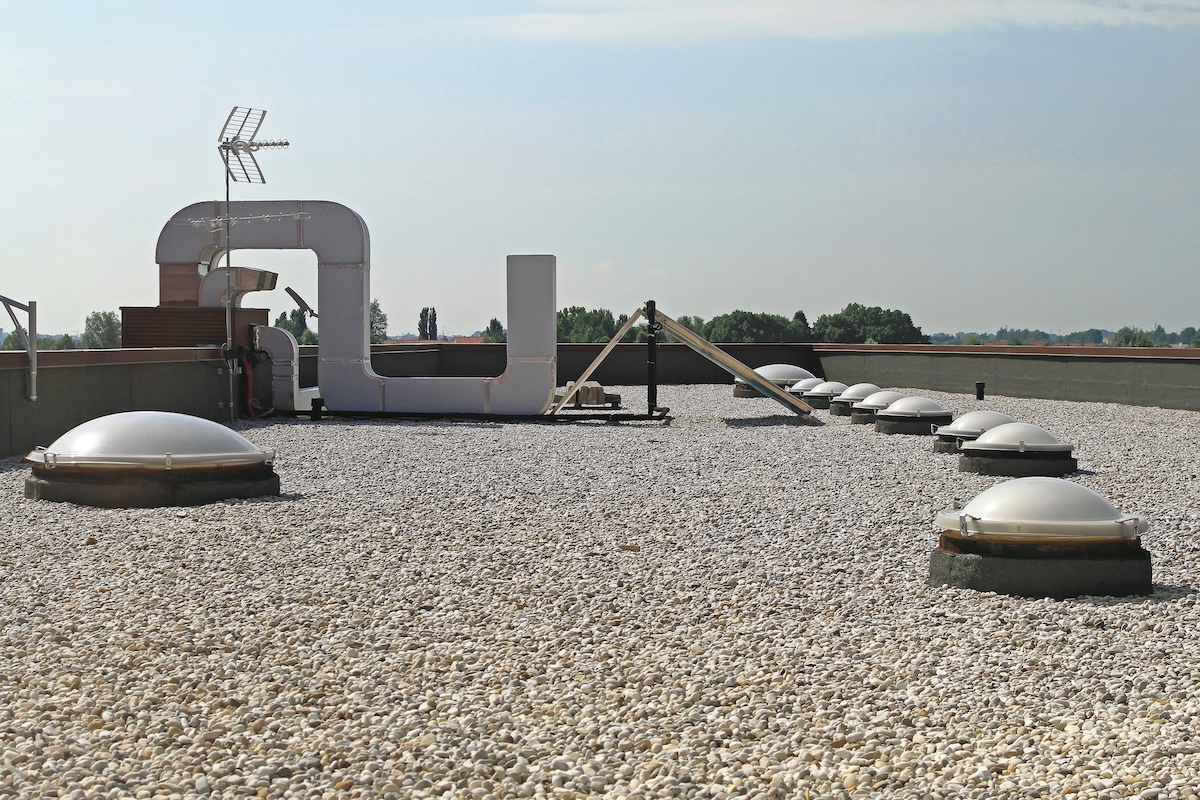
Built-up roofing was the dominant commercial flat roof system in Miami-Dade County from the 1950s through the mid-1990s. The system — multiple layers of felt or fiberglass ply sheets laminated with hot asphalt and surfaced with aggregate or a cap sheet — provided solid service life when installed correctly. The problem in Miami is that correctly installed is a high standard. Hot asphalt application requires consistent temperature control that is difficult in South Florida's summer heat, interply mopping rates that were frequently under-specified in practice, and aggregate embedment that provides UV protection and acts as ballast — but which also adds significant weight to an aging roof deck.
Hurricane Andrew's 1992 landfall exposed the structural vulnerability of BUR systems with inadequate perimeter and corner zone attachment. Post-storm assessment data showed that BUR systems with full base sheet attachment and adequate fastening performed substantially better than systems relying only on mopped-in plies for uplift resistance. The revised Florida Building Code and Miami-Dade NOA system after 1992 required base sheet mechanical attachment for all BUR systems in the High-Velocity Hurricane Zone — this distinction matters when you are assessing a pre-1992 BUR system for hurricane compliance.
We assess BUR systems honestly. If the system has significant saturated insulation — confirmed by moisture core or nuclear scanning — and the deck is sound, the honest scope is often a targeted recover that replaces wet areas and adds a mechanically attached cap sheet or TPO over the existing dry BUR layers. If the system has deck deterioration, widespread saturation, or perimeter flashings that are not salvageable, the honest scope is tear-off and replacement. We do not recommend recovering a system that will fail again in three years.
Assessing Miami BUR Systems Before Scoping
A BUR system cannot be scoped accurately from a visual inspection alone. The most important variable — whether the insulation and lower ply layers are saturated with water — is invisible from the surface. On gravel-surfaced BUR, the aggregate layer conceals the cap sheet condition. On cap-sheet BUR, surface blisters and ridges indicate interply moisture or venting issues, but the extent of saturation below the cap sheet requires either moisture probing or infrared thermography to map.
We use a combination of tools depending on building size and access constraints. Nuclear moisture detection (Tramex-style electronic meters) works well on smaller roof areas and gives a quick spatial map of dry versus suspect areas. Moisture core pulls — removing a 4-inch diameter core through the BUR assembly — confirm saturation at suspect locations and show the deck condition below. On large roof areas above 30,000 square feet, infrared thermography conducted at dusk following a clear sunny day provides the most cost-effective spatial map of wet versus dry insulation for scoping decisions.
Deck condition under BUR is the variable most likely to surprise owners on older Miami commercial buildings. Corroded metal deck — especially on pre-1970 buildings in Hialeah, Little Havana, and the older industrial corridors — can be structurally compromised without the deterioration being visible from below in occupied space. Wood board sheathing on mid-century commercial buildings is another risk area — BUR systems installed over 1960s-era wood board decks in high-moisture environments can have deck sections that are structurally inadequate for a new roof load. We pull deck inspection ports at moisture core locations on every assessment of a pre-1985 BUR system.
Recover Options for Miami BUR Systems
A BUR recover — installing a new roofing system over the existing BUR without tear-off — is cost-effective when the existing insulation is dry, the deck is sound, and an NOA-approved recover assembly exists for the specific combination of existing and new materials. In Miami-Dade, the recover option is attractive because tear-off adds significant cost (labor, disposal, debris management) and extends the project timeline during a period when the building is exposed.
The most common recover path for Miami BUR systems is a mechanically attached TPO or EPDM membrane installed over a recover board (high-density polyiso or gypsum) attached to the existing BUR. The recover board provides a smooth substrate for the new membrane, adds R-value toward Florida Energy Code requirements, and gives the fastener pattern a defined attachment point. Miami-Dade product approvals for specific recover board and membrane combinations specify the fastener pattern, fastener type, and embedment depth into the existing assembly.
A modified bitumen cap sheet recover — installing a torch-applied or self-adhered modified bitumen cap over the existing BUR — is another option for buildings where a single-ply membrane would create accessability or ponding issues. Modified bitumen cap sheet recovers are appropriate when the existing BUR surface is smooth (cap sheet or lightly graveled), the existing assembly has adequate drainage, and an NOA-approved torch-grade or SBS cap sheet system is available for the existing substrate. We do not torch over gravel-surfaced BUR — the aggregate creates an irregular substrate that does not support uniform heat adhesion.
Tear-Off and Replacement Scope for BUR Buildings
When moisture core data shows that more than 25 percent of the insulation area is saturated, tear-off is the honest recommendation. Recovering saturated insulation traps moisture below the new system, creates conditions for mold growth in Miami's year-round high humidity, and voids the manufacturer warranty on the new membrane system — most single-ply manufacturers explicitly exclude warranty coverage over wet substrates.
BUR tear-off on occupied Miami commercial buildings requires careful staging. Gravel-surfaced BUR must be removed in a way that controls aggregate dispersal — loose gravel becomes projectile debris if it reaches unprotected areas. We stage tear-off in 5,000 to 10,000 sq ft sections with same-day dry-in, and we maintain vacuum equipment on site for aggregate removal from exposed deck and parapet areas before the dry-in section is left overnight.
Post-tear-off, the deck inspection determines whether the replacement scope goes to a standard new-roof path or requires deck repair before re-roofing. Corroded metal deck on pre-1992 Hialeah and Downtown Miami commercial buildings is the most common complication — when we find it, we document it photographically, provide a corroded-panel count, and give the owner a choice between deck repair (cutting out and replacing corroded panels) and supplemental structural attachment (sister purlins that create a new fastening substrate without removing the corroded primary deck). The right choice depends on the extent of corrosion and the structural engineer's assessment of the deck's remaining load capacity.
HVHZ Compliance for BUR and Modified Bitumen Systems
Pre-1992 BUR systems in Miami-Dade were typically installed without the base sheet mechanical attachment that the post-Andrew FBC HVHZ requirements mandate. Assessing hurricane compliance on an existing BUR system means verifying the base sheet attachment method — whether the base sheet is mechanically fastened into the deck or only mopped. A mopped-only BUR assembly without supplemental mechanical fastening does not
New BUR and modified bitumen installations in Miami-Dade must have current Miami-Dade NOA approvals for the complete assembly — base sheet type, attachment method, interply count, cap sheet, and surface. The NOA specifies the fastener type and pattern for field, perimeter, and corner zones. We submit the NOA number with the Miami-Dade building permit application and document the installation against the NOA requirement at closeout.
Frequently asked questions
Is built-up roofing still installed on new Miami commercial buildings?
Rarely on new construction. BUR has largely been replaced by TPO and PVC single-ply membranes for new commercial low-slope construction in Miami-Dade. Modified bitumen — a close relative of BUR using polymer-modified asphalt plies — is still specified for specific applications, particularly in recover configurations and on buildings where foot traffic and mechanical abuse favor the thicker ply system. We install and maintain both BUR and modified bitumen on existing buildings but rarely specify BUR for new construction.
How do I know if my 1980s Miami office building's BUR system is still viable?
A moisture survey is the starting point — either electronic moisture probing or infrared thermography. If insulation saturation is below 25 percent by area and the deck is sound, a recover with targeted wet-area removal and a new mechanically attached membrane or modified bitumen cap is often viable. If saturation is widespread or the deck is deteriorated, replacement is the honest scope. We provide the moisture survey data and the deck inspection findings as part of the assessment so the decision is based on documented condition rather than a contractor's estimate.
Can a BUR system be recovered with TPO in Miami-Dade?
Yes, when the BUR substrate is dry, the deck is sound, and an NOA-approved recover assembly exists for the specific BUR type and TPO system combination. We verify the NOA approval before designing the recover specification. Not all TPO manufacturer systems have Miami-Dade NOA approvals for BUR recover configurations — the approval list is assembly-specific.
What is the typical service life of a Miami BUR system?
A well-installed BUR system in Miami conditions typically provides 20 to 30 years of service life before significant rehabilitation is required. Miami's high UV intensity, surface temperatures exceeding 160 degrees F, and coastal salt environment accelerate asphalt oxidation and ply adhesion degradation relative to inland markets. Pre-1992 Miami BUR systems that are now 30-plus years old and have not been recovered or significantly repaired are generally past viable service life.
Get a documented BUR condition assessment for your Miami building.
Our project managers will conduct a moisture survey, pull cores at suspect locations, inspect deck condition, and deliver a written report with recover-versus-replace recommendation and cost basis — before any commitment to a scope.
Explore More
- Self Storage Roofing
- Government Building Roofing
- Commercial Roof Replacement
- Expansion Joint Repair
- Standing Seam Metal Roofing
- Multifamily Roofing
- Modified Bitumen Roofing
- About