Hurricane Wind Uplift Roofing
Miami, FL · Services

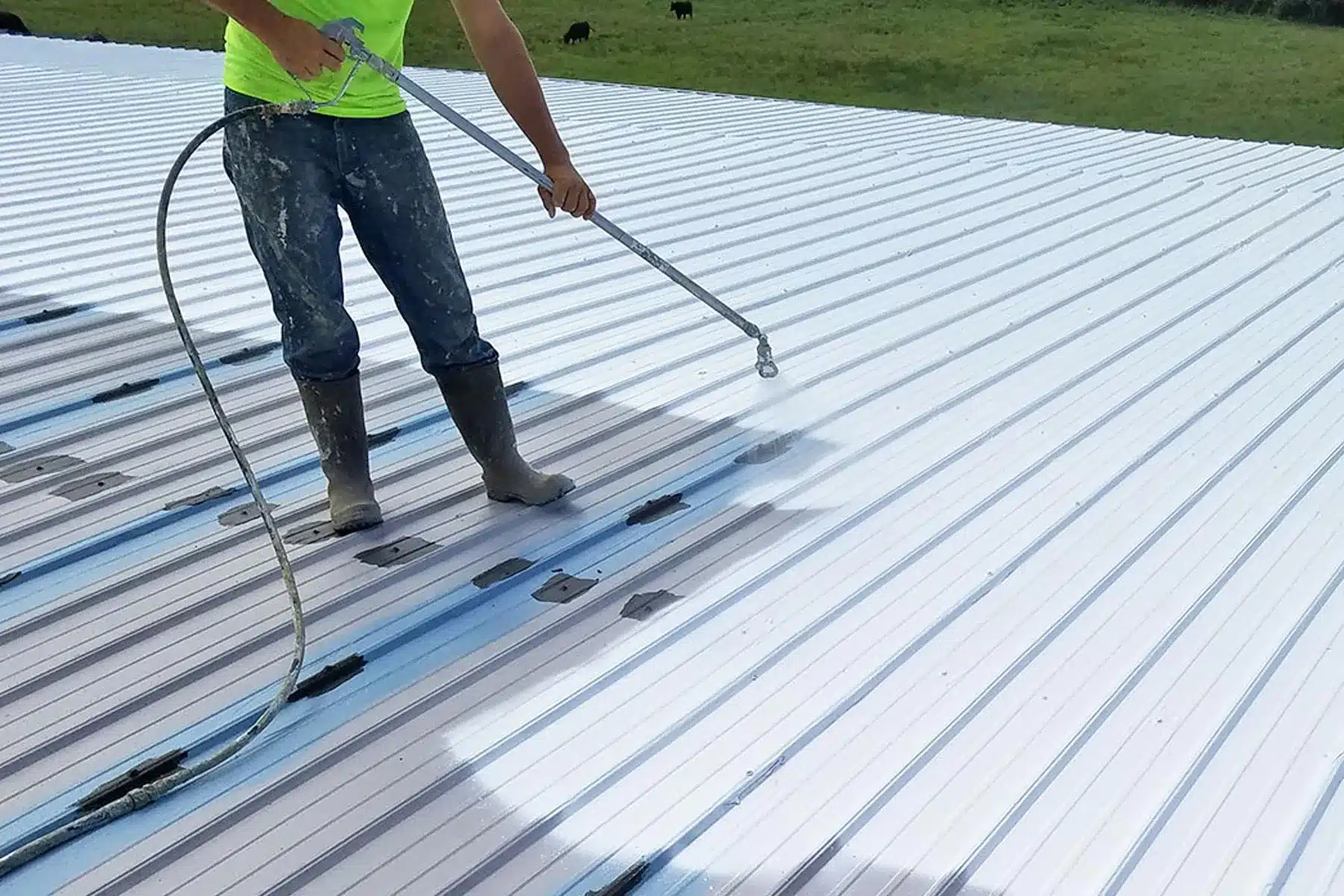
Every commercial roof in Miami-Dade County will face hurricane-force winds within its projected service life. We install roof assemblies that are designed and documented to
Hurricane Andrew made landfall in south Miami-Dade on August 24, 1992 with sustained winds of 165 mph. It destroyed or severely damaged more than 125,000 homes and an estimated 40% of the pre-Andrew commercial roof stock in the county. Post-storm engineering analysis identified three consistent failure modes: insufficient fastener density in perimeter and corner zones, inadequate adhesive application on fully-adhered systems, and flashing details at parapets and penetrations that could not resist the dynamic pressure cycling that accompanies sustained high-wind events.
The Florida Building Code's High-Velocity Hurricane Zone requirements and the Miami-Dade product approval (NOA) system were both substantially revised in Andrew's wake. Hurricane Irma (2017), which crossed Miami-Dade with sustained winds of 130 mph, provided a full-scale test of those revisions. Post-Irma inspection data consistently showed that NOA-compliant assemblies with properly designed perimeter and corner zone fastening performed materially better than pre-FBC systems or improperly installed post-FBC systems.
We design, specify, and install commercial roof assemblies to FBC HVHZ requirements. That means ASCE 7 wind-uplift design for the specific building and exposure category, three-zone fastener patterns (field, perimeter, corner) with densities derived from the design pressure for each zone, only assembly systems with current Miami-Dade NOA approvals, and documented installation that supports manufacturer warranty and Miami-Dade final inspection.
How Wind-Uplift Design Works for Miami Commercial Roofs
Wind-uplift on a flat commercial roof is not uniform. ASCE 7 — the standard referenced by the Florida Building Code — divides the roof surface into three zones: field (interior area), perimeter (edge strips typically 10% of the smaller building dimension wide), and corners (the intersection of two perimeter strips). Wind-uplift design pressures in perimeter zones typically run 1.5 to 2 times the field pressure. Corner zone pressures run 2 to 3 times the field pressure. This is why the vast majority of hurricane roof failures initiate at corners and perimeter edges.
For a mechanically attached single-ply system (TPO, EPDM, or PVC), the fastener pattern is the primary uplift resistance mechanism. Field zone patterns for a typical Miami office building might be one fastener per 2 to 3 square feet of membrane. Perimeter zones for the same building might require one per 1.5 square feet, and corners one per square foot or tighter. These patterns are calculated building-by-building based on the building's design wind speed (which in Miami-Dade is 185 mph for new construction per the 2020 FBC), building height, exposure category, and roof zone dimensions.
For fully adhered systems, the adhesive coverage rate and application method are the uplift resistance mechanism. Miami-Dade's NOA system requires that adhesive application rates and methods be documented and verified during installation — inspectors check coverage rates during installation for NOA-compliant fully adhered assemblies.
Perimeter and Corner Zone Detailing
Perimeter and corner flashings are where wind-uplift failures concentrate. The Florida Building Code requires that perimeter metal edge and coping systems carry their own Miami-Dade NOA approvals separate from the roof membrane system. We specify only perimeter edge metal and coping with current NOA approvals for the design wind speed at the specific building.
Parapet wall flashing at the membrane-to-parapet connection is the second most common failure initiation point after corner zone membrane blow-off. We install parapet flashings to manufacturer's published details — not generic 'best practice' details that may not
Roof drain sumps, penetration flashings, and equipment curb flashings all require specific attachment details in the HVHZ. Penetrations that are not properly flashed to an NOA-approved detail create stress concentrations in the membrane under dynamic wind loading. We document every penetration flashing at closeout against the NOA-approved detail.
Post-Hurricane Emergency Response
After a hurricane landfall, the priority is emergency dry-in to prevent water damage from entering the building through wind-damaged roofing. Emergency dry-in work in Miami-Dade post-storm does not always require a building permit — Miami-Dade Building Department issues emergency repair authorizations for dry-in work in the immediate post-storm period. We carry emergency tarping and temporary membrane materials on every active project during hurricane season, and we maintain post-storm mobilization capacity for maintenance-contract customers.
Post-storm damage documentation for insurance purposes requires photographs keyed to a roof zone diagram taken immediately after the event, before any repair work. We document pre-existing condition separately from event-related damage — this separation is what allows an adjuster to evaluate a claim accurately. Damage documentation that conflates pre-existing condition with storm damage is the most common reason Miami-Dade commercial roof claims under-settle.
Hurricane-Season Roof Preparation
The Florida Department of Emergency Management and Miami-Dade Emergency Management both recommend pre-hurricane-season roof inspections for commercial buildings. Our pre-season inspection documents parapet flashing condition, drain condition, perimeter edge metal condition, and any open penetrations or prior repairs that could become failure initiation points under hurricane-force wind. We provide a written report that quantifies the risk and prioritizes repairs by severity.
Hurricane season runs June 1 through November 30. We recommend pre-season inspections in April and May — before the permit backlog that typically develops when a storm approaches. A pre-season inspection that identifies a failed perimeter flashing can be repaired in May. The same repair identified after a storm watch is posted may not be completed before the event.
Frequently asked questions
What wind speed does a Miami commercial roof have to be designed for?
The 2020 Florida Building Code sets the ultimate design wind speed for Miami-Dade County at 185 mph for Risk Category II buildings (most commercial buildings). The design pressure for any specific roof zone is calculated from that base wind speed using ASCE 7 methodology — building height, exposure category, and roof zone dimensions all affect the final design pressures that determine fastener pattern density.
How do I know if my existing roof meets HVHZ requirements?
For roofs installed after the major FBC revisions in the early 2000s, Miami-Dade's permit records should include the approved NOA numbers and fastener pattern design for the installation. For older roofs, or for roofs where the installation documentation is missing, we can perform a field inspection that includes fastener pull-out testing to verify actual uplift resistance versus design requirement. We provide a written report that identifies whether the existing assembly meets current HVHZ standards.
Are silicone coatings and restoration systems compliant with HVHZ requirements?
Some fluid-applied silicone and acrylic coating systems carry Miami-Dade NOA approvals when applied over specific approved substrates. Not all coating systems are NOA-approved for HVHZ use — the approval is assembly-specific and depends on the substrate (existing membrane type and condition) as well as the coating manufacturer and application rate. We specify coating restoration only where an active NOA covers the specific assembly, and we document the NOA approval in the closeout package.
Do you offer post-hurricane emergency response?
Yes. For buildings on our maintenance contracts, we provide priority post-storm emergency dry-in response. For non-contract buildings, we respond as capacity allows after a storm event. During hurricane season we maintain emergency tarping and temporary membrane materials on all active projects, and we staff post-storm response teams in advance of any storm that Miami-Dade issues a watch or warning for.
Get a pre-hurricane-season roof assessment or wind-uplift design review.
Our project managers will inspect the perimeter, corner zones, and flashing details that are most likely to fail under hurricane-force wind — and give you a written report with repair priorities before storm season.
Explore More
- Warehouse Roofing
- Restaurant Roofing
- Humidity Damage Roof Repair
- Roof Leak Repair
- EPDM Roofing
- School Roofing
- Commercial Roof Coatings
- About