Standing Seam Metal Roofing
Miami, FL · Services
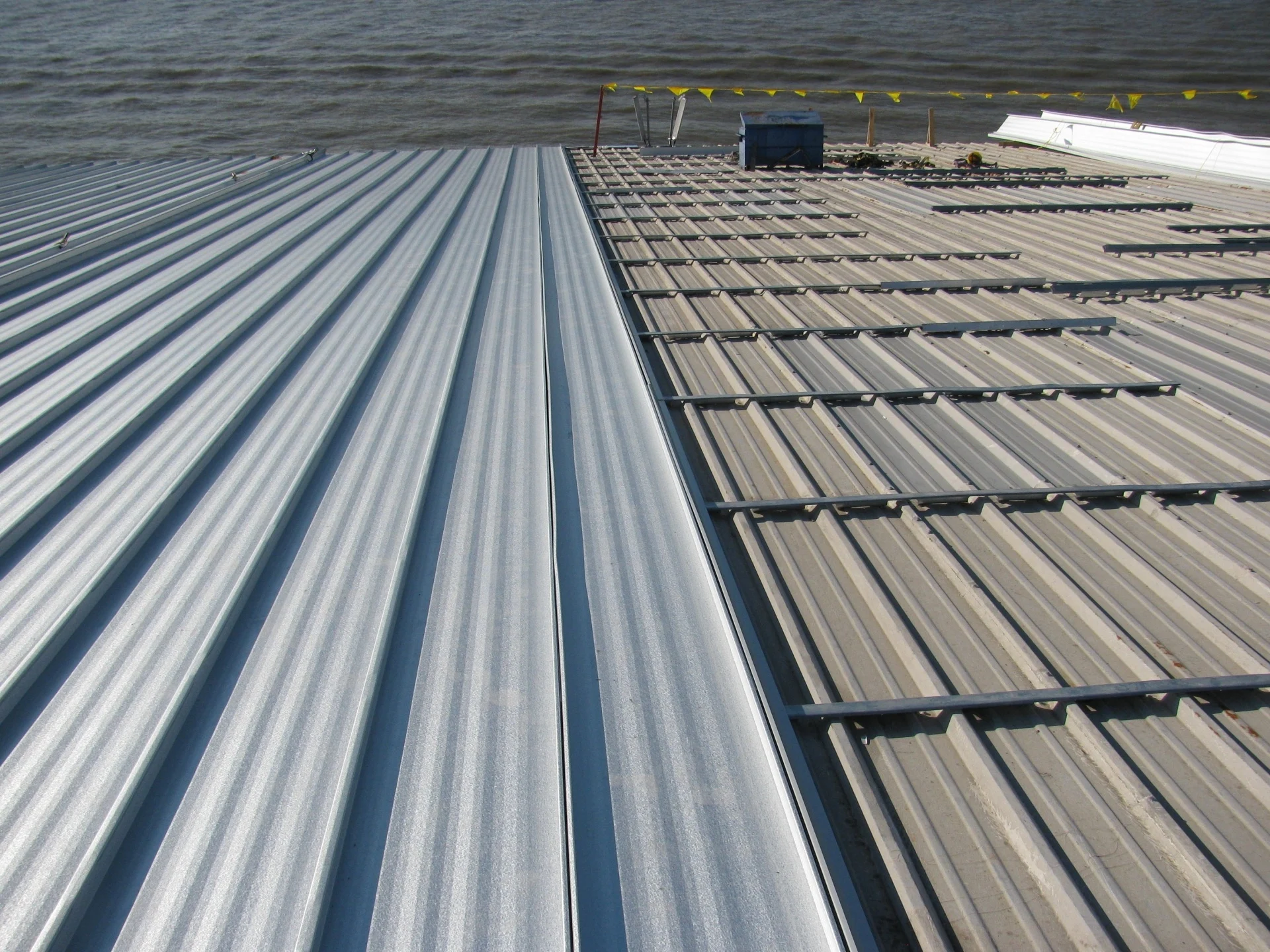
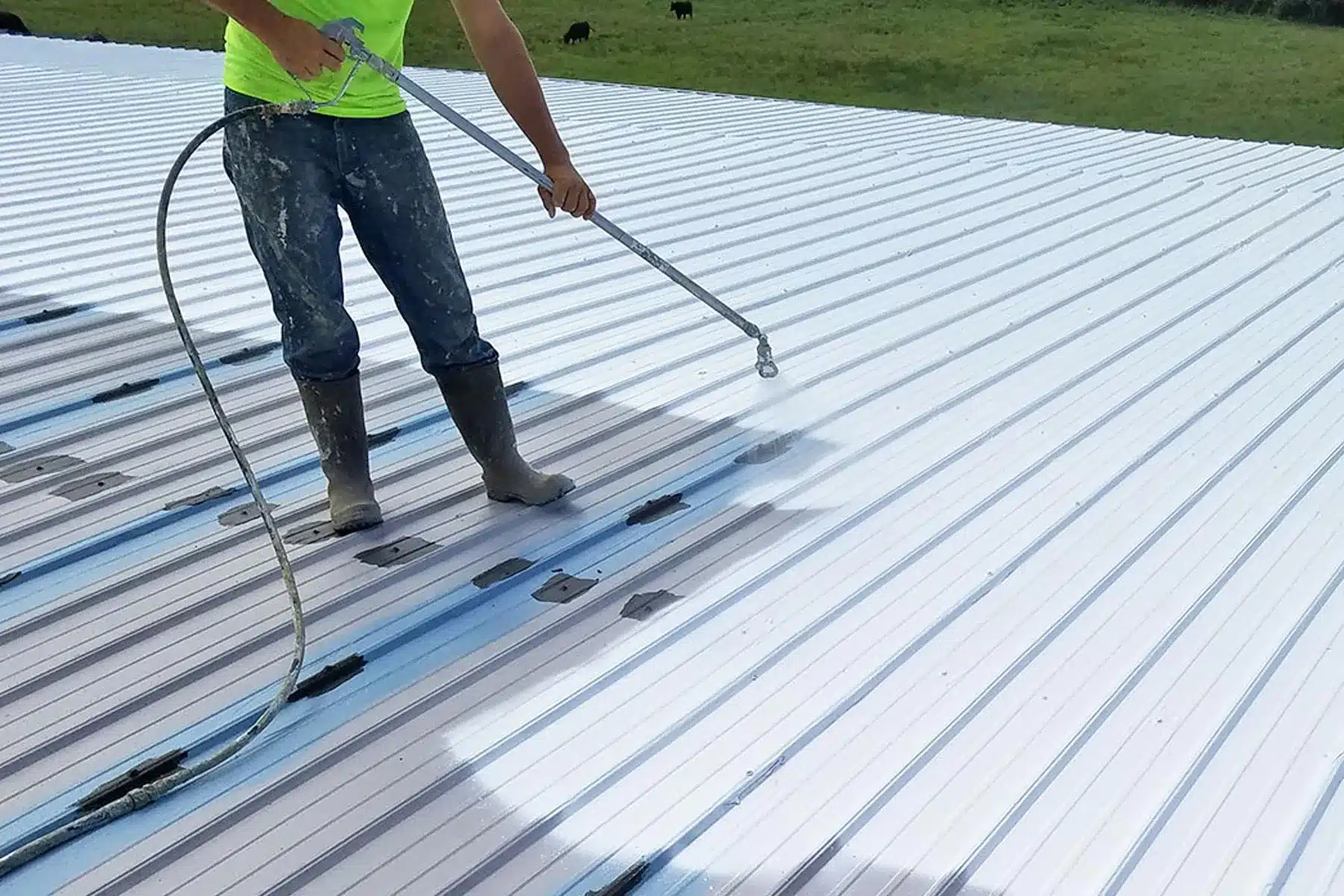
Standing seam metal is one of the few roof systems where the attachment clip — not the fastener count — is the wind-uplift resistance mechanism. In Miami-Dade's High-Velocity Hurricane Zone, that distinction matters. We specify and install concealed-clip standing seam panels with current Miami-Dade NOA approvals for the design wind speed at the specific building.
Standing seam metal roofing gets specified in Miami for a narrow set of situations where it performs better than low-slope membrane alternatives: steep commercial slopes above 3:12, retail and mixed-use buildings where the roof is visible and architectural appearance matters, and buildings where the owner's capital horizon extends past 40 years and the lifecycle cost advantage of a properly maintained metal roof offsets the higher first cost. Outside those situations, it is often the wrong system — and we will say so when the site visit does not support it.
Miami's environment is aggressive for metal roofing. Salt air from Biscayne Bay and the Atlantic accelerates corrosion on ferrous panels within five miles of the water. Buildings on Miami Beach, Brickell waterfront, and Edgewater require Kynar 500-coated aluminum or painted Galvalume with appropriate mil thickness for coastal exposure — bare galvanized steel does not have an adequate service life in a direct coastal environment. We specify coating systems and substrates against actual site salt exposure, not against the lowest-cost option that passes the spec sheet.
The Florida Building Code's High-Velocity Hurricane Zone requirements govern standing seam panel installation in Miami-Dade exactly as they govern low-slope membrane systems. Every panel system we install carries a current Miami-Dade NOA approval for the complete assembly — panel profile, clip type, clip fastening, substrate, and batten or nailer system. We document the NOA approval numbers in the permit application and the closeout package.
How Standing Seam Wind-Uplift Works in the HVHZ
A concealed-clip standing seam system resists wind uplift through the clip attachment pattern and the clip's engineered pull-through capacity. Unlike mechanically attached single-ply membrane systems where individual fasteners attach the membrane directly, standing seam panels float on clips that are fastened to the substrate — the panel seams interlock over the clips without a fastener penetrating the face of the panel. This means the water tightness of the panel is not compromised by the attachment pattern.
For Miami-Dade HVHZ compliance, the clip spacing and fastener pattern into the structural substrate must be engineered against the ASCE 7 design pressures for the building's three zones — field, perimeter, and corner. A standing seam system with clips spaced at 24 inches on center for the field zone may require 12-inch spacing in corner zones on a building with open bay exposure to Biscayne Bay. The clip design and panel width also affect the calculated capacity — a 16-inch-wide panel and a 12-inch-wide panel in the same profile can have materially different uplift ratings.
Miami-Dade's product approval database lists currently active NOAs for standing seam panel systems by manufacturer and panel profile. The approval lists the allowable wind uplift for the system and the clip spacing limits for each zone. We verify that the NOA we are designing against is current — some manufacturers have had NOA lapses after product line changes — and we submit the NOA number with the permit application.
Panel Material and Coating for South Florida
Galvalume-coated steel panel is the standard substrate for commercial standing seam work in most of the country. In Miami-Dade's coastal and near-coastal environment, Galvalume 24-gauge or 22-gauge with a Kynar 500 or Hylar 5000 fluoropolymer paint system provides adequate corrosion resistance for buildings within two to five miles of the water. For buildings on Miami Beach, the Venetian Islands, and waterfront Brickell properties, we specify aluminum panel — typically 0.040-inch or 0.050-inch aluminum with Kynar coating — which eliminates the base-metal corrosion risk entirely.
Pre-painted steel and aluminum panels arrive at the project site with factory-applied paint. Cut ends, field punching, and panel notching at penetrations expose the substrate at the cut. On coastal Miami projects, all field cuts are treated with zinc-rich cut-edge treatment before the panel is installed. Failure to treat cut edges on a Galvalume panel in a direct coastal environment is one of the most common reasons standing seam systems fail prematurely in Miami-Dade.
Color and finish selection for Miami commercial buildings also involves heat gain. Miami's solar radiation load is among the highest in the continental United States. Dark panel colors on a south-facing roof slope significantly increase cooling load on occupied buildings. Energy Star-qualified panel finishes with high solar reflectance index (SRI) values are available from most major manufacturers and reduce cooling energy cost for Miami commercial buildings with occupied space below the roof deck.
Transitions, Penetrations, and Flashing Details at Slope Changes
Standing seam roofing on commercial buildings almost always meets a low-slope membrane roof at a slope transition. The transition flashing — where the standing seam panel terminates against the low-slope field — is the most common failure point on mixed-slope commercial roofs. The detail requires a step flashing that integrates with both the standing seam panel seam and the low-slope membrane system, and it must accommodate differential thermal movement between the metal panel system and the membrane without opening a water path. We design transition flashings using manufacturer-published details for the specific panel profile, not generic metal flashing details that may not accommodate the panel's thermal movement range.
Penetrations through standing seam panels — pipe stacks, HVAC supply ducts, and conduit — require individual pitch pans or manufactured curb flashings that maintain the concealed-fastener principle of the panel system. A field-cut penetration with a rubber boot and exposed fasteners through the panel face is not code-compliant under most NOA-approved assemblies and creates a stress concentration point under hurricane-force wind loading. We specify manufactured curb and pitch pan flashings designed for the panel profile we are installing.
Miami's frequent afternoon thunderstorms during hurricane season also mean standing seam gutters and scuppers on commercial buildings need to be sized for high-intensity short-duration rainfall events. We size gutters against Miami's 10-year, 1-hour rainfall intensity (roughly 3.5 to 4 inches per hour depending on location) rather than against regional averages that underestimate South Florida peak rainfall rates.
When Standing Seam Makes Sense and When It Does Not
Standing seam is the right system for Miami commercial buildings with slopes above 3:12 where a low-slope membrane system would require special detailing at every panel transition. It works well for visible-slope retail and hospitality applications in Coral Gables, the Brickell Arch district, and Miami Beach where architectural character is part of the design intent. For high-rise Brickell towers with large flat roof fields and mechanical equipment grids, it is rarely the right system — the crew access requirements, penetration count, and equipment curb complexity make membrane systems more practical.
On buildings where the owner is replacing a failed standing seam system, we first assess whether the original system failed from a design deficiency — wrong clip spacing for the building's actual uplift exposure, inadequate cut-edge treatment, or a panel profile that did not have a current NOA when it was installed — or from a maintenance deficiency — failed sealant at penetration pitch pans, panel corrosion at untreated field cuts, or gutter failure from undersizing. The scope of the replacement depends on the failure mode, not just the visible damage.
Frequently asked questions
Does standing seam metal roofing qualify for a Miami-Dade NOA?
Yes. Miami-Dade County maintains a product approval database with active NOAs for standing seam panel systems from most major manufacturers. The NOA covers the complete assembly — panel profile, clip type, clip fastener pattern, and substrate system — not just the panel itself. We specify only panel systems with current, in-force NOA approvals and submit the NOA numbers with the building permit application.
How long does standing seam metal roofing last in the Miami coastal environment?
A properly specified Kynar-coated Galvalume or aluminum standing seam system on a Miami commercial building should provide 40 to 50 years of service life with appropriate maintenance — sealant replacement at penetration pitch pans and cut-edge inspection on a 5-year cycle. Coastal buildings within a half mile of the water that use Galvalume without adequate coating will see significant base-metal corrosion in 15 to 20 years. Aluminum panel eliminates the base-metal corrosion risk in direct coastal applications.
Can standing seam metal roofing be installed on a building in a Miami-Dade historic district?
In some cases, yes. Coral Gables' Mediterranean Revival architectural tradition includes standing seam tile-profile metal roofing on historic commercial buildings. Installation in a historic district requires Historic Preservation Board approval for any visible change to the building's roofline character. We have experience coordinating the architectural documentation and board presentation requirements for Coral Gables historic district projects.
What is the typical cost premium for standing seam over TPO on a Miami commercial building?
Standing seam on a commercial building typically costs 1.5 to 2.5 times the installed cost of a TPO membrane system on the same roof area. The premium is justified for steep slopes, high-visibility architectural applications, and owners with long capital horizons — past 30 to 40 years — where lifecycle cost analysis favors metal. For flat low-slope roofs with no slope visibility and 15 to 20 year capital cycles, TPO is almost always the more cost-effective choice.
Is standing seam the right system for your Miami commercial building?
Our project managers will evaluate the slope, site exposure, coastal environment, and capital horizon of your building and give you a written system recommendation — not a standing seam pitch regardless of whether it fits your situation.
Explore More
- Auto Dealership Roofing
- University Campus Roofing
- Storm Damage Roof Repair
- Skylight Repair
- Single Ply Roofing
- Office Building Roofing
- PVC Roofing
- About